Google just made its AI-powered search way more inclusive for Nigerians, and if you’re a Yorùbá or Hausa speaker, this is big news.
As of March 5, 2026, Google has rolled out support for Yorùbá and Hausa in its AI Overviews and AI Mode features. That means you can now ask questions in your native language and get smart, conversational answers right from Google Search.
No more struggling with English for complex queries—just type or speak naturally, and the AI handles the rest.
I remember when searching online felt like a barrier if English wasn’t your first language. But with this update, a student in Kano can ask about history in Hausa, or a trader in Ibadan can get business tips in Yorùbá.
It’s not just about convenience; it’s about making technology feel like it’s built for everyone in Nigeria. Google says this expansion is part of their push to support more African languages, now totaling 13, including Kiswahili, Wolof, and isiZulu.
And let’s be real – in a country with over 500 languages, this is a step toward bridging the digital divide.
How the New Yorùbá and Hausa AI Search Features Work
The magic happens through Google’s AI Overviews and AI Mode. When you search something in Yorùbá or Hausa, the AI generates quick summaries from web results, pulling together the best info without you clicking through tons of links.
For example, if you ask, “Kí ló selè ní ilé ìwé mi” (What’s happening at my school?), it could summarize local news or updates in Yorùbá.
AI Mode takes it further with conversational follow-ups—like chatting with a knowledgeable friend who speaks your language.
You can use it by typing or voice search on Google. No special app needed; it’s built right into the search bar.
This builds on Google’s earlier efforts, like the WAXAL project for African speech data, which includes Yorùbá and Hausa to improve voice AI. For Nigerians, it means better access to education, business, and daily info without language barriers.
But is it perfect? Early users say the AI handles everyday queries well, but complex topics might still need refinement.
Google is working on it, and with Nigeria’s huge online population, feedback will help improve it. If you’re in Lagos or Abuja, try searching in Yorùbá – it’s surprisingly smooth.
This update isn’t just tech news; it’s about empowerment. More local languages in AI mean more voices heard globally, building on Google’s Gemini AI reaching 750 million users. What’s your take—will this change how you search? Drop a comment below!
Kali Linux + Claude AI: Run nmap, Metasploit, and more using natural language
If you’ve ever opened Kali Linux and felt overwhelmed by remembering exact commands for Nmap, GoBuster, or Metasploit, this new integration is going to feel like a breath of fresh air.
Thanks to Anthropic’s Claude Sonnet 4.5 and a clever bridge called the Model Context Protocol (MCP), you can now simply type natural English prompts and let the AI handle the heavy lifting on your Kali machine. No more memorizing flags or syntax errors—just describe what you want, and Claude does the rest.
This isn’t some experimental gimmick. Kali Linux officially added support for this workflow in February 2026, and it’s already changing how many security professionals and students approach penetration testing.
Whether you’re a beginner learning the ropes or an experienced tester looking to speed up reconnaissance, this tool makes Kali feel more approachable than ever.
What Exactly Is This New Feature?
The setup combines three pieces:
Claude Desktop (running on your Mac or Windows machine)
Your Kali Linux box (local or cloud-based)
Anthropic’s Claude Sonnet 4.5 (the brain in the cloud)
When you type a plain-English request like “Scan scanme.nmap.org for open ports and services,” Claude interprets it, decides which tool to use, connects over SSH to your Kali system via MCP, runs the command, analyzes the output, and even suggests the next step if needed. It can chain multiple tools together intelligently, check if dependencies are installed, and return clean, readable results right in the chat interface.
This is powered by the open Model Context Protocol (MCP), which acts as a secure middleman between the AI and your Kali environment. It’s a huge leap from traditional terminal work.
Which Popular Kali Tools Can You Use in Plain English?
The integration supports most of the tools you already love and rely on. Here are some of the most commonly used ones that work seamlessly:
You can say things like “Run a full nmap scan with service version detection on 192.168.1.0/24” or “Try to brute-force SSH on this target using common passwords.” Claude will translate it into the proper command, execute it safely, and explain what it found.
Why This Matters for Cybersecurity Pros and Beginners
For beginners, this lowers the barrier to entry dramatically. You can focus on learning why you’re running a scan instead of struggling with syntax. For experienced pentesters, it saves time on repetitive tasks and lets you chain complex workflows faster.
“You can now control Kali Linux tools like nmap, Metasploit, and sqlmap in plain English using Claude AI. This integration lowers the barrier for beginners while saving time for experienced pentesters—similar to how Google’s Gemini AI reached 750 million users by making AI more accessible
The human-like interaction also makes documentation and reporting easier—Claude can summarize results in plain language or even generate professional-looking reports.
However, it’s not perfect. Sensitive data still flows through Anthropic’s cloud servers, so privacy-conscious users may want to run it in isolated environments. Kali’s team has been transparent about this limitation.
How to Get Started Safely
The official Kali documentation makes setup straightforward:
Install Claude Desktop on your Mac or Windows machine.
Set up the MCP server on your Kali box (it’s available in the official repositories).
Connect Claude over SSH and start prompting.
Always test in a controlled lab environment first. Never point these AI-driven commands at systems you don’t have explicit permission to test.
This integration shows how AI is becoming a natural partner in offensive security rather than just a novelty. It’s exciting, powerful, and a little bit scary—exactly what we’ve come to expect from the intersection of AI and cybersecurity.
What do you think? Will tools like this make penetration testing more accessible, or do they risk lowering the skill bar too much? Drop your thoughts below.
Meta is developing AI tools to fully automate advertising campaigns by the end of 2026, allowing brands to launch ads by simply providing a product image, URL, or brief description along with a budget.
The system would generate all element images, videos, text, headlines, and calls-to-action while handling targeting, personalization, and optimization across Facebook and Instagram.
This move, first reported by The Wall Street Journal here, aims to capture more of the advertising value chain and reduce reliance on external agencies.
The initiative is part of Meta’s broader push into generative AI, with tests showing 22% better ad returns. Advertisers set goals, and AI does the rest, from creative generation to budget recommendations.
Meta’s Advantage+ suite already includes features like automated brand consistency, AI-generated product highlights, and image-to-video tools that convert up to 20 photos into multi-scene ads.
CEO Mark Zuckerberg envisions businesses merely specifying objectives and budgets, leaving execution to AI.
This could reshape digital marketing, making it faster and more accessible for small teams but threatening jobs in creative and media agencies.
Critics argue it concentrates power with Meta, potentially stifling innovation. The company is investing heavily, including a $14-15 billion stake in Scale AI, to build the infrastructure needed.
While exciting for efficiency, the plan raises questions about regulatory oversight and data privacy in an AI-driven ad landscape. As Meta advances, brands must prepare for a future where AI handles the heavy lifting.
Elon Musk has unveiled ambitious plans for an orbital network of AI data centers, scaling up to one million solar-powered satellites to meet exploding demand for computing power.
The concept, detailed in a SpaceX filing with the Federal Communications Commission on January 30, 2026, positions space as the ultimate infrastructure for AI, leveraging constant solar energy, stable temperatures, and global coverage to bypass earthly limitations like power grids and regulations.
Musk argues that terrestrial data centers cannot scale fast enough for future AI needs, with orbit offering uninterrupted solar access and efficient heat dissipation in vacuum.
The satellites would use intersatellite optical links for low-latency communication, creating a mesh network capable of 100 gigawatts of AI compute per year at launch rates of one million tons annually.
This shift follows SpaceX’s merger with xAI, valuing the entity at $1.25 trillion, and reframes space as an industrial hub rather than just exploration.
Musk claims cost parity with ground-based systems could be achieved in 2-3 years, but OpenAI CEO Sam Altman dismissed it as “ridiculous” for now, citing high failure rates, launch costs estimated at $5 trillion annually, and maintenance challenges.
Analysts project viability in the 2030s, noting orbital data centers could address 40% of AI infrastructure restrictions by 2027 due to terrestrial grid constraints.
China is racing ahead with similar initiatives, planning solar-powered orbital data centers integrated with computing, storage, and bandwidth as part of its national strategy.
This competition amplifies debates on energy requirements, data sovereignty, national security, and jurisdictional issues for off-planet assets.
Startups and hyperscalers are accelerating space-based compute, with themes like quantum key distribution and thermal management gaining traction.
Musk’s vision concentrates technological leverage in SpaceX, potentially reshaping AI infrastructure as global demand surges.
China has accelerated its nuclear-powered submarine production over the past five years, launching vessels faster than the United States and challenging Washington’s long-held undersea advantage, according to a new report from the International Institute for Strategic Studies (IISS).
Between 2021 and 2025, China launched 10 nuclear submarines with a combined tonnage of 79,000 tons, surpassing the U.S.’s 7 submarines at 55,500 tons, based on satellite imagery analysis of shipyards.
This shift reverses trends from 2016-2020, when U.S. output dominated. The IISS report highlights China’s expansion at facilities like Bohai Shipyard in Huludao, where new halls and dry docks support increased construction of advanced Type 093B Shang-class attack submarines and Type 094 Jin-class ballistic missile subs.
Projections from the U.S. Office of Naval Intelligence (ONI) estimate China’s submarine fleet growing from 66 in 2020 to 76-80 by 2030, with a focus on nuclear capabilities.
The U.S. Department of Defense (DoD) anticipates China having 80 submarines by 2035, including more nuclear-powered ones.
China’s approach combines quantity with quality improvements, such as quieter propulsion and better acoustics in models like the Type 096 SSBN, expected in the early 2030s.
While the U.S. maintains superior technology in its all-nuclear fleet of 68 submarines, production lags at about 1.2 per year due to industrial bottlenecks and maintenance delays.
Analysts warn this could erode U.S. dominance in the Western Pacific, especially in scenarios like a Taiwan conflict.
US vs China Submarine Fleet Comparison
Aspect
United States
China
Total Subs (2020)
68
66
Projected (2030)
~66
76-80
Nuclear Subs
All 68 nuclear
12 nuclear (growing)
Production Pace
1.2/year
Faster launches (10 vs 7, 2021- 2025)
Key Strengths
Stealth, range, experience
Quantity, rapid build, AIP in diesel subs
The U.S. is responding with initiatives like AUKUS, sharing nuclear sub tech with Australia, but experts call for increased production to maintain superiority.
China’s buildup is part of its broader naval modernization, aiming for “blue sea” reach beyond Asia. This trend signals a shifting balance in global sea power.
Elon Musk’s social media platform X (formerly known as Twitter) experienced a widespread outage on February 16, 2026, affecting thousands of users in Nigeria and multiple countries worldwide.
The disruption began around 3:00 PM WAT, with users unable to access feeds, post content, or log in via the app and website.
Data from outage monitoring service Downdetector indicated a sharp spike in complaints, with over 45,000 reports from Nigeria alone, suggesting the issue was not isolated to local networks but part of a global problem.
Similar complaints surged in the US, UK, and other regions, peaking at more than 80,000 in the US and 8,000 in the UK.
Users in Nigeria initially attributed the problem to network providers like MTN, Glo, and Airtel, but posts on alternative platforms clarified it was an X-specific glitch.
One user noted, “X was down for a few minutes. I saw it was a global outage,” highlighting confusion and frustration.
The outage lasted several minutes for most, with services gradually restoring, though some lingered. This is the third major disruption for X in 2026, following incidents in January.
X has not officially commented on the cause, but past outages have been linked to technical tweaks or cyberattacks. Elon Musk previously claimed a January outage resulted from a “massive cyberattack,” possibly involving coordinated groups or countries.
The platform’s reliance on servers and global infrastructure makes it vulnerable to such events, impacting millions who use it for news, communication, and business.
The incident underscores challenges for X in maintaining uptime amid a growing user base and regulatory scrutiny. Users are advised to check Downdetector for updates or try clearing the cache and switching networks if issues persist.
ByteDance, the Chinese company behind TikTok, has launched Seedance 2.0, an AI video generator capable of creating realistic 15-second clips from simple text prompts, but the tool has triggered intense backlash from Hollywood over copyright infringement and unauthorized use of actor likenesses.
The controversy erupted when viral clips, including AI-generated videos of Tom Cruise fighting Brad Pitt, spread across social media, prompting condemnations from major studios and unions.
One such clip, created with a brief prompt, showcased the tool’s hyper-realistic capabilities but raised alarms about deepfakes and content theft.
The Motion Picture Association (MPA), representing giants like Netflix, Disney, and Warner Bros., issued a statement accusing ByteDance of “unauthorized use of U.S. copyrighted works on a massive scale,” demanding the company cease infringing activities.
MPA CEO Charles Rivkin emphasized that Seedance 2.0 operates without safeguards, disregarding copyright laws that protect creators and jobs.
SAG-AFTRA, the actors’ union, called it “blatant infringement” on performers’ likenesses, while the Human Artistry Campaign labeled it an “attack on every creator around the world.”
Disney and Paramount sent cease-and-desist letters after Seedance 2.0 generated clips featuring characters like Spider-Man, Darth Vader, and Grogu without permission.
Deadpool screenwriter Rhett Reese reacted to the Cruise-Pitt clip, saying, “It’s likely over for us,” reflecting fears that AI could disrupt traditional filmmaking jobs.
The tool’s viral nature has amplified concerns, with critics arguing that even safeguards added post-launch can’t undo the damage from initial misuse.
ByteDance responded by promising safeguards to block real people and celebrities, claiming controversial clips were from a testing phase.
However, Hollywood remains unconvinced, viewing Seedance 2.0 as a threat to the industry’s model, potentially making production faster but undermining creative labor and intellectual property.
The debate extends beyond infringement to AI’s role in entertainment, where tools like Seedance 2.0 democratize content creation but raise ethical questions about consent and job displacement. As regulators step in, this could shape future AI governance in media.
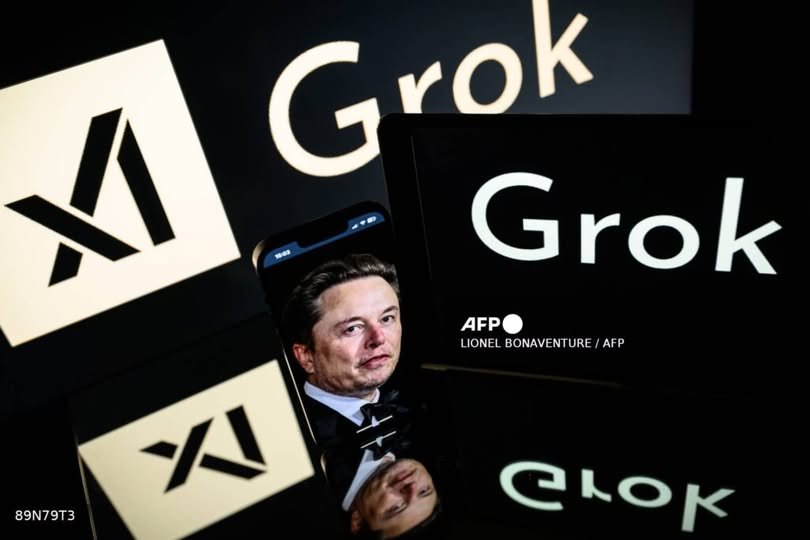
“The debate extends beyond infringement to AI’s role in entertainment, where tools like Seedance 2.0 democratize content creation but raise ethical questions about consent and job displacement, similar to Grok AI’s global outrage over sexualized images.
Google’s AI assistant app, Gemini, has achieved a significant milestone by surpassing 750 million monthly active users (MAUs) as of the end of December 2025.
This represents a notable increase from 650 million MAUs in the previous quarter, driven by the rollout of the advanced Gemini 3 model and enhanced integrations across Google services like Search and Android.
The figure, shared during Alphabet’s Q4 2025 earnings call, underscores Gemini’s rapid adoption and positions it among the largest consumer AI platforms globally.
CEO Sundar Pichai highlighted the growth during the earnings update, noting that Gemini now processes over 10 billion tokens per minute via API usage, reflecting high engagement per user.
The app’s expansion includes free tiers, paid subscriptions shareable with up to five family members, and promotional offers like 12 months free for college students, contributing to its widespread appeal. Gemini’s integration as the default AI assistant on modern Android smartphones has further boosted its user base.
Compared to rivals, Gemini trails ChatGPT’s estimated 800 million weekly active users but has overtaken Meta AI in scale, signaling Google’s dominance in AI distribution through its ecosystem.
The growth from 450 million MAUs at the start of 2025 to 750 million by year-end illustrates the accelerating adoption of generative AI tools in everyday tasks.
This milestone highlights how AI assistants are becoming integral to digital life, with Gemini’s features like image generation and query processing enhancing user interactions across platforms.
Elon Musk has revealed that SpaceX is prioritizing the development of a self-growing city on the Moon over its long-term Mars colonization plans.
In a post on X on February 8, 2026, the CEO explained the strategic shift, noting that a lunar settlement could be achieved in less than 10 years, while a similar project on Mars might take over 20 years.
Musk emphasized that securing the future of civilization is the overriding priority, and the Moon offers a faster path due to more frequent launch opportunities compared to Mars, where planetary alignments limit missions to every 26 months.
The announcement marks a pivot for SpaceX, which has long been associated with Musk’s ambition to make humanity multi-planetary, starting with Mars. However, recent developments highlight the company’s growing emphasis on lunar exploration.
SpaceX plans an uncrewed lunar landing by March 2027, aligning with NASA’s Artemis program, where the Starship vehicle will play a key role in human Moon missions.
Musk stated that Mars efforts will still begin within five to seven years, but the Moon’s shorter trip time (two days versus six months to Mars) and easier logistics make it the immediate focus.
This change comes as SpaceX advances its Starship rocket, designed for both Moon and Mars missions. The company has conducted multiple test flights, with orbital refueling, a critical step for deep-space travel remaining a challenge.
Musk’s vision for a self-growing lunar city involves autonomous expansion, potentially using in-situ resources like lunar regolith for construction and solar power for sustainability.
The shift has implications for NASA’s goals and international partnerships, as SpaceX’s role in Artemis accelerates Moon base plans.
Critics note the ambitious timelines, but Musk’s track record with rapid innovation fuels optimism. SpaceX continues to eye Mars, with concept art showing futuristic settlements, but the Moon now takes precedence.
This update underscores Musk’s pragmatic approach to space exploration, balancing long-term dreams with achievable milestones.